
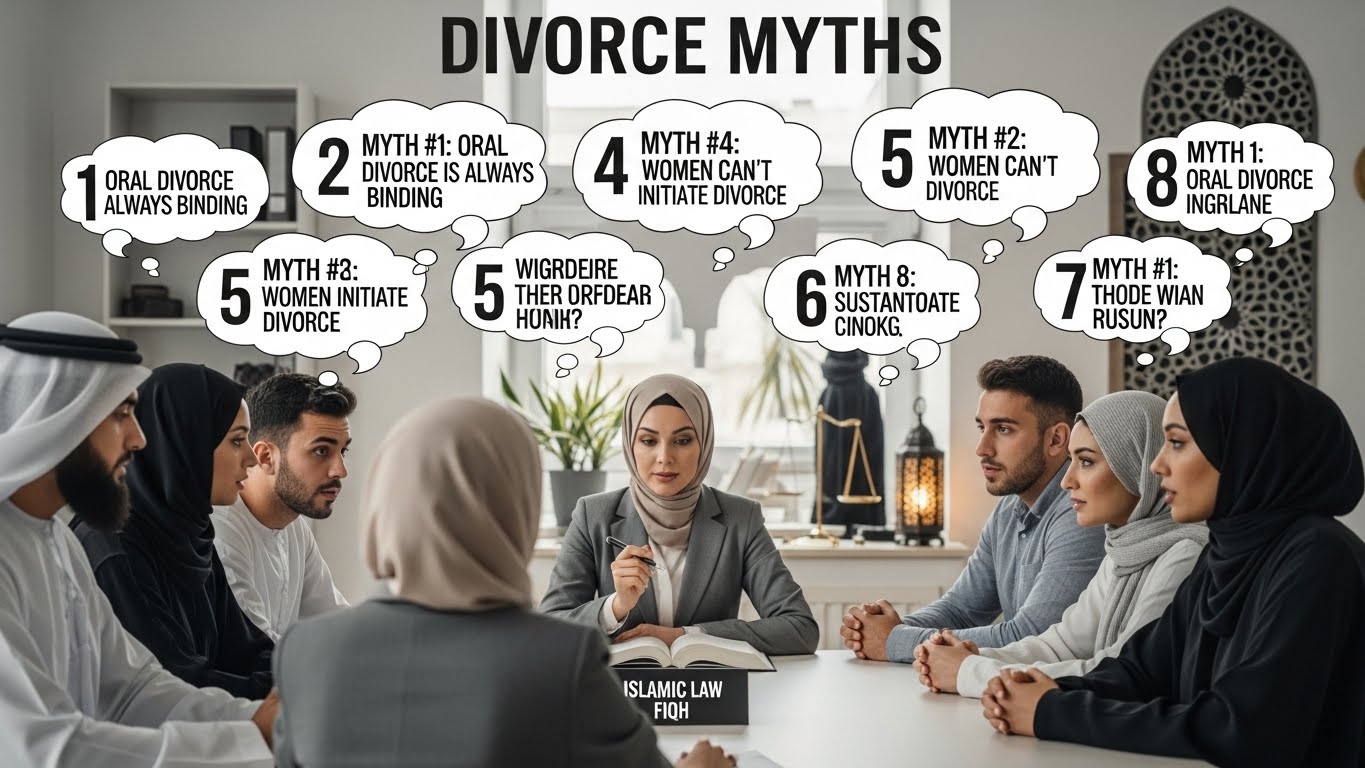

Divorce is one of the most misunderstood topics in Muslim societies. Cultural traditions, incomplete religious knowledge, and misinformation have created deep confusion around divorce in Islam. Many people believe divorce is instant, always unjust to women, or purely a religious matter with no legal consequences. These misconceptions often lead to emotional distress, legal complications, and prolonged disputes.
As a practicing legal professional familiar with divorce law in Pakistan, this article aims to clarify the most common legal myths about divorce in Islam. By combining Islamic principles with Pakistani family law, this guide provides accurate, practical, and lawful clarity—especially for those considering or already involved in divorce proceedings.
Understanding Divorce in Islam: Religion vs Law
Divorce in Islam is permitted but discouraged unless necessary. Islam recognizes marriage as a sacred contract, yet acknowledges that separation may sometimes be the healthiest option. Importantly, Islamic divorce principles must be understood alongside the divorce procedure in Pakistan, which is governed by statutory law.
In Pakistan, divorce is regulated primarily under:
- Muslim Family Laws Ordinance, 1961
- Family Courts Act, 1964
This means divorce is not just a religious act—it carries legal obligations, timelines, and documentation requirements.
Myth 1: Divorce in Islam Is Instant and Final
One of the most widespread myths is that saying “talaq” once immediately ends a marriage.
Legal Reality
Under Islamic teachings, divorce is a process, not a single event. The Quran emphasizes reconciliation, arbitration, and waiting periods (iddah). Similarly, under divorce law in Pakistan, divorce is not legally effective unless:
- Written notice is given to the Union Council
- A 90-day reconciliation period is completed
Without following this procedure, the divorce is legally invalid, regardless of verbal pronouncements.
Myth 2: Only Men Have the Right to Divorce in Islam
Many believe women have no authority to initiate divorce.
Islamic Perspective
Islam allows women to seek divorce through:
- Khula (judicial divorce)
- Talaq-e-Tafweez (delegated right of divorce, if granted in Nikahnama)
Legal Perspective in Pakistan
Under Pakistani law, women can file for:
- Khula through Family Court
- Dissolution of marriage on multiple legal grounds
An experienced divorce lawyer Lahore can help women assert their legal and Islamic rights effectively.
Myth 3: Triple Talaq Is Automatically Valid in Pakistan
Another dangerous misconception is that triple talaq instantly dissolves a marriage.
Truth Under Divorce Law in Pakistan
Pakistan does not recognize instant triple talaq as legally binding. Even if talaq is pronounced three times:
- Written notice is mandatory
- Union Council reconciliation is compulsory
- Legal effectiveness begins only after 90 days
Failure to follow this can result in criminal liability and invalid divorce status.
Myth 4: Divorce in Islam Leaves Women Financially Helpless
This myth prevents many women from seeking justice.
Islamic Rights of Women After Divorce
Islam ensures financial protection through:
- Haq Mehr (dower)
- Maintenance during iddah
- Child maintenance
Legal Safeguards in Pakistan
Pakistani courts enforce:
- Recovery of dower
- Monthly maintenance
- Child support orders
A qualified divorce lawyer Lahore can secure these rights efficiently through court proceedings.
Myth 5: Divorce Is Only a Religious Matter, Not a Legal One
Many couples believe involving courts is unnecessary.
Legal Reality
In Pakistan, divorce has serious legal consequences affecting:
- Remarriage legality
- Child custody
- Property disputes
- National identity records
Ignoring the divorce procedure in Pakistan can lead to:
- Invalid remarriage
- Criminal charges
- Loss of legal rights
Myth 6: Khula Is Automatic if the Wife Wants It
Khula is often misunderstood as an unconditional right.
Actual Legal Position
Khula requires:
- Court filing
- Evidence of marital breakdown
- Return or waiver of dower (in most cases)
Family courts evaluate each case carefully. Legal representation ensures smoother outcomes.
Myth 7: Child Custody Always Goes to the Father
This belief is deeply rooted but legally incorrect.
Islamic Principle
Islam prioritizes the welfare of the child.
Pakistani Law
Custody decisions depend on:
- Child’s age
- Child’s well-being
- Parent’s capability
Courts often grant custody to mothers for young children while ensuring visitation rights for fathers.
Step-by-Step Divorce Procedure in Pakistan
Understanding the correct legal process avoids unnecessary disputes.
For Talaq (Husband-Initiated Divorce)
- Written notice to Union Council
- Copy sent to wife
- 90-day reconciliation period
- Divorce certificate issued
For Khula (Wife-Initiated Divorce)
- File suit in Family Court
- Court attempts reconciliation
- Decree of dissolution
- Union Council notification
Failure to follow these steps can invalidate the divorce.
Role of a Divorce Lawyer Lahore
Divorce involves emotional and legal complexities. A professional divorce lawyer Lahore helps by:
- Ensuring legal compliance
- Protecting financial rights
- Managing child custody cases
- Preventing procedural errors
Legal guidance is especially important in contested cases or overseas marriages.
Cultural Practices vs Divorce Law in Pakistan
Many myths originate from culture, not Islam or law. Forced marriages, denial of khula, and social pressure have no legal or Islamic basis.
Courts in Pakistan increasingly distinguish between:
- Cultural customs
- Islamic principles
- Statutory law
This legal clarity protects both men and women.
Conclusion:
Understanding divorce in Islam requires separating religious teachings from cultural myths and aligning them with the divorce law in Pakistan. Divorce is neither instant nor unjust when handled correctly. Both men and women have defined rights, and legal procedures exist to protect families, children, and dignity.
Seeking advice from a qualified divorce lawyer Lahore ensures compliance with Islamic values and Pakistani law, preventing long-term legal complications. Knowledge is the first step toward justice—and clarity is the key to peace.
FAQs
Q1. Is divorce in Islam discouraged?
Yes, it is permitted but considered a last resort after reconciliation efforts.
Q2. Is verbal talaq valid in Pakistan?
No, written notice and legal procedure are mandatory.
Q3. Can a woman file divorce without husband’s consent?
Yes, through khula under Pakistani law.
Q4. How long does the divorce procedure in Pakistan take?
Typically 90 days for talaq; khula may take several months depending on the case.
Q5. Do I need a divorce lawyer Lahore for mutual divorce?
While not mandatory, legal guidance ensures accuracy and avoids future disputes.
Q6. Does divorce affect child custody permanently?
No, custody arrangements can be revised in the child’s best interest.