
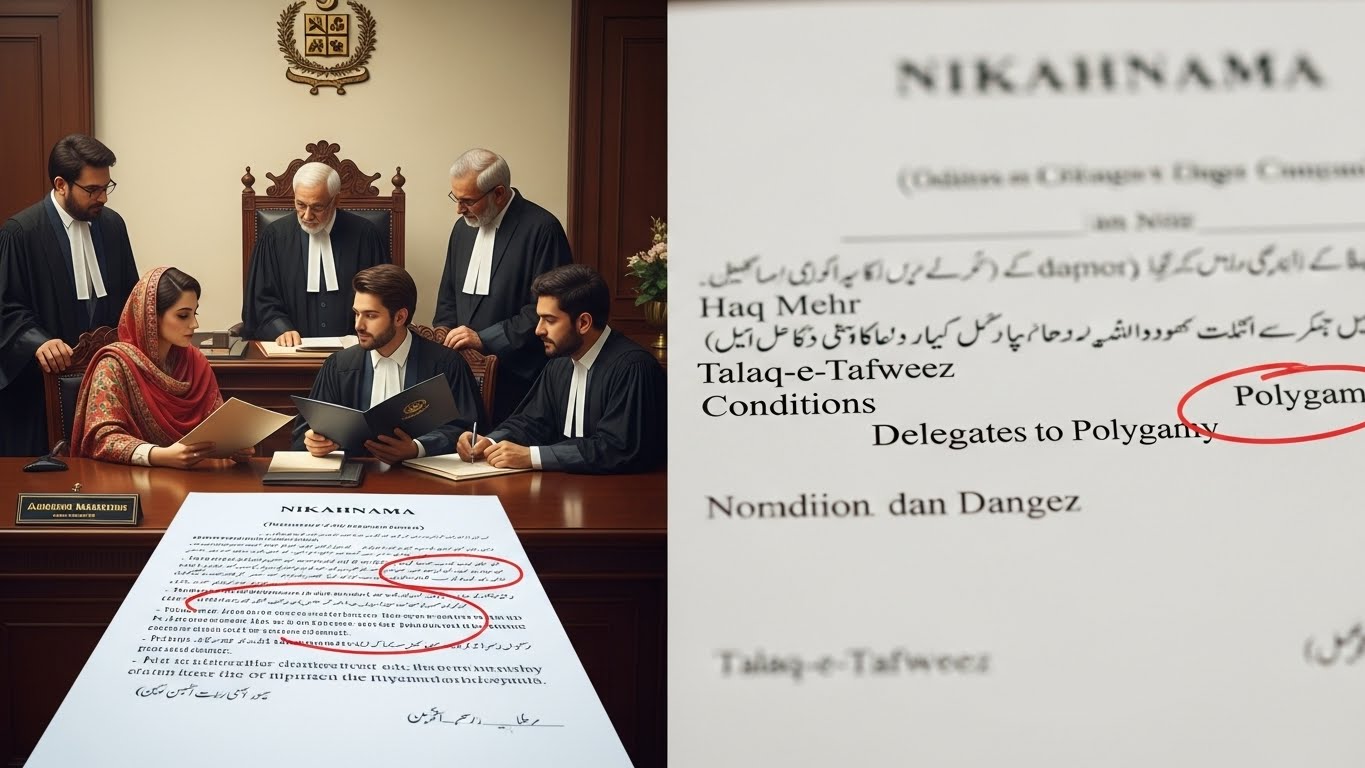

What Is Court Marriage?
Court marriage is a legally recognized union solemnized under Pakistani law without traditional ceremonies. In simple words, court marriage in Pakistan allows two consenting adults to marry through a lawful contract registered with the relevant authorities. Many couples choose this route due to personal choice, interfaith issues, family disagreements, or the need for quick legal recognition.
Importantly, court marriage doesn’t invalidate cultural or religious values. Instead, it ensures the marriage is properly documented, enforceable, and protected under law. In today’s evolving society, this option has become increasingly popular, especially in urban areas.
Legal Framework Governing Court Marriage
Court marriages in Pakistan are governed by:
- Muslim Family Laws Ordinance, 1961
- Nikah Nama Rules
- Family Courts Act, 1964
These laws ensure that marriage contracts are legally binding and that both spouses’ rights are safeguarded. You can also refer to Pakistan’s official legal resources for authenticity, such as the Law and Justice Commission of Pakistan (https://ljcp.gov.pk).
Importance of Court Marriage Contracts
Legal Protection for Both Spouses
A properly drafted marriage contract protects both parties. It clarifies rights, responsibilities, and remedies in case of disputes. Without documentation, spouses may face serious legal hurdles later.
That’s why court marriage contracts are vital—they provide clarity, enforceability, and peace of mind.
Role of Nikahnama in Court Marriage
Nikahnama is the backbone of any court marriage in Pakistan. It’s not just a religious formality but a legal document that can be enforced in court. Every clause matters, especially when conflicts arise.
Nikahnama Explained: More Than a Marriage Form
Historical Background of Nikahnama
Traditionally, Nikahnama served as a simple record of marriage. Over time, Pakistani courts have recognized it as a binding legal agreement. Today, it functions like a contract outlining mutual consent and conditions.
Legal Status of Nikahnama in Pakistan
Pakistani courts consistently uphold Nikahnama clauses, provided they don’t contradict Islamic principles or state law. This makes it a powerful legal tool in court marriage in Pakistan cases.
Essential Nikahnama Clauses You Should Know
Haq Mehr Clause
Haq Mehr is the wife’s legal right. The amount, payment method, and timeline should be clearly written. Courts strictly enforce this clause, so clarity is critical.
Delegated Right of Divorce
This clause allows the wife to exercise the right of divorce (Talaq-e-Tafweez). Many couples ignore it, but it can provide essential protection later.
Maintenance and Financial Rights
Nikahnama can specify monthly maintenance, living standards, and financial responsibilities. These clauses reduce future disputes significantly.
Property and Residence Clauses
Couples may agree on residence arrangements and property rights. Including these details in court marriage contracts adds transparency and trust.
Court Marriage Procedure in Pakistan
Step-by-Step Court Marriage Process
- Mutual consent of bride and groom
- CNIC verification
- Affidavit of free will
- Nikah solemnization before Nikah Registrar
- Registration with Union Council
This streamlined process makes court marriage in Pakistan efficient and lawful.
Required Documents
- CNIC copies
- Passport-size photographs
- Affidavits
- Divorce certificate (if applicable)
Court Marriage Fee in Pakistan
Government Fees
Government fees are relatively low, usually ranging from PKR 1,000 to PKR 3,000 depending on province and union council.
Lawyer and Documentation Charges
Lawyer fees vary. On average, court marriage fee in Pakistan including legal assistance ranges between PKR 15,000 to PKR 40,000, depending on city and complexity.
Court Marriage in Lahore: City-Specific Insights
Why Lahore Is a Hub for Court Marriages
Lahore has efficient family courts, experienced lawyers, and streamlined registration processes. This makes court marriage in Lahore faster and more accessible.
Timeline and Local Practices
Most court marriages in Lahore are completed within a single day, provided documents are complete. Local lawyers often assist in drafting Nikahnama clauses carefully.
Common Misconceptions About Court Marriage
- It’s against religion (false)
- It has no social value (false)
- Nikahnama clauses don’t matter (very false)
In reality, court marriage strengthens legal and religious compliance.
Risks of Ignoring Nikahnama Clauses
Ignoring clauses can lead to:
- Financial disputes
- Custody issues
- Lengthy court cases
A well-drafted Nikahnama acts like insurance for married life.
Role of Lawyers and Family Courts
Lawyers ensure compliance with law and help customize Nikahnama clauses. Family courts enforce these contracts when disputes arise, reinforcing trust in the system.
Conclusion
Court marriage contracts are not just paperwork—they’re the foundation of a secure marital relationship. In court marriage in Pakistan, the Nikahnama plays a central role in defining rights and responsibilities. Whether you’re planning a court marriage in Lahore or elsewhere, understanding Nikahnama clauses can save you from future conflicts. By investing time in drafting a clear marriage contract today, couples can build a more transparent, respectful, and legally protected future together.
FAQs
1. Is court marriage legal in Pakistan?
Yes, court marriage in Pakistan is fully legal and recognized by law.
2. What is the average court marriage fee in Pakistan?
The average court marriage fee in Pakistan ranges from PKR 15,000 to PKR 40,000 including legal charges.
3. Can Nikahnama clauses be customized?
Yes, clauses can be customized with mutual consent.
4. How long does court marriage in Lahore take?
Usually one working day if documents are complete.
5. Is Nikahnama enforceable in court?
Absolutely. Courts treat it as a binding legal contract.
6. Do we need witnesses for court marriage?
Yes, two adult Muslim witnesses are required.