
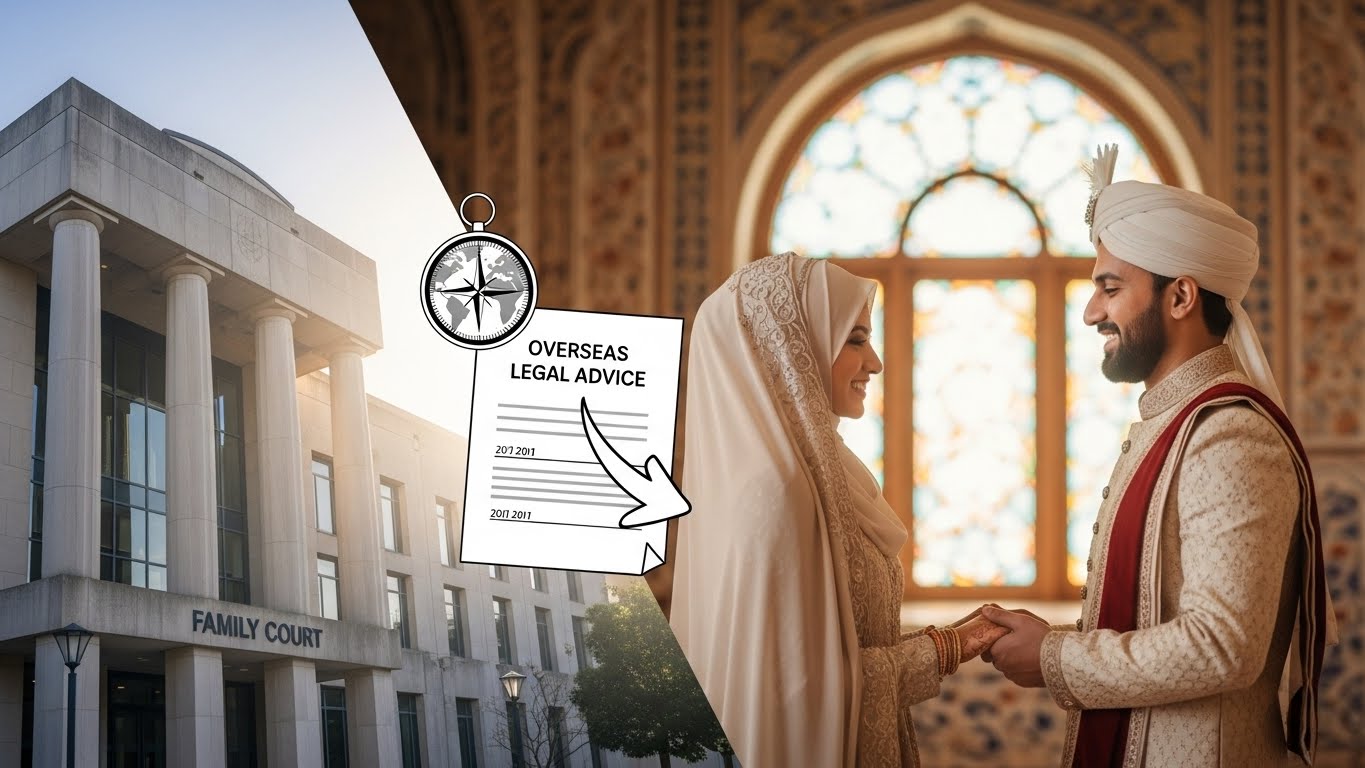

Marriage is one of the most important decisions in life, and for overseas Pakistanis or international couples, the process can be confusing. Whether you live abroad or your partner does, choosing between Court Marriage and Nikah for Overseas involves understanding legal requirements, documentation, registration, embassy rules, and immigration implications.
This comprehensive guide provides Couples Legal Advice backed by practical experience, ensuring that both local and overseas partners understand everything clearly before proceeding.
We will cover:
- Legal differences between Court Marriage and Nikah
- Requirements for overseas Pakistanis
- Required documents
- Verification and attestation procedures
- Embassy submission requirements
- How to avoid delays in immigration
- FAQs prepared by professional legal practitioners
This article is written in clear, accessible language—but with legal accuracy—to make sure couples make informed decisions.
Understanding Court Marriage in Pakistan
Court Marriage is a legally recognized union performed under law, typically without the involvement of families. It’s handled by:
- A licensed Nikah Registrar
- An authorized lawyer
- A Magistrate (in some cases only for verification)
Court Marriage is ideal for:
- Couples who want privacy
- Couples belonging to different sects or religions
- Overseas couples needing legal documents quickly
- Couples needing urgent marriage certificates for visa or immigration
Key Features of Court Marriage
- Immediate registration
- Legally valid even without family approval
- Quick issuance of Nikahnama & Marriage Registration Certificate (MRC)
- Essential for immigration purposes
Court Marriage is the fastest method for couples who need their marriage recognized internationally.
Understanding Nikah for Overseas Pakistanis
Nikah for Overseas is a marriage process designed specifically for:
- A Pakistani living abroad
- A foreign spouse
- Two Pakistanis living in different countries
- Couples unable to travel due to work, visa, or financial limitations
The Nikah can be performed through:
- Online Nikah (via video call)
- Proxy Nikah (representative signs on behalf of spouse)
- Nikah through lawyer verification
This process is fully legal in Pakistan if done correctly with:
- Power of Attorney
- Video Proof
- Proper documentation
- Verified signatures
- Attested Nikahnama
Why Overseas Couples Choose Online/Proxy Nikah
- One partner cannot travel
- Spouse needs prompt marriage proof for immigration
- Couples want Shariah + legal recognition
- International unions needing properly documented marriage papers
Most overseas Pakistanis in UAE, UK, USA, Canada, Australia, and Europe use this option.
Legal Differences: Court Marriage vs Nikah for Overseas Couples
| Feature | Court Marriage | Nikah for Overseas |
| Physical Presence | Both partners physically present | One or both may be abroad |
| Method | In-person Nikah + paperwork | Online / proxy + attorney |
| Documents | CNIC, photos, etc. | Passport, visa, POA, online verification |
| Marriage Certificate | Issued same day or within 48 hrs | Issued after verification |
| Ideal For | Local couples | Overseas couples |
| Cost | Low to moderate | Moderate (due to POA & embassy processes) |
Both are legally valid in Pakistan AND accepted internationally—if proper documentation is completed.
Required Documents for Court Marriage in Pakistan
You will need:
- CNIC or B-Form (for both individuals)
- Two passport-size photos
- Age-proof documents
- Written affidavits from bride & groom
- Two Muslim male witnesses
- Conversion Certificate (if any partner converts to Islam)
Time Required:
2–4 hours in most cases.
Documents You Receive:
- Nikahnama (Urdu form)
- English Translation
- NADRA Marriage Registration Certificate (MRC)
Required Documents for Nikah for Overseas Couples
Depending on your location, these may include:
- Scanned passport copies
- Valid visa copies
- National ID documents (CNIC/NICOP)
- Power of Attorney notarized abroad
- Signed Nikah-nama authorization
- Video call verification proof
- Bride & groom photographs
- Conversion Certificate (if needed)
Additional Requirements for Foreign Nationals:
- Birth certificate
- No Objection Certificate (NOC)
- Single Status Affidavit
- Passport + visa copy
Different embassies have different requirements. Always check immigration guidelines.
Process of Court Marriage in Pakistan
Step 1: Legal Consultation
Couples receive Couples Legal Advice regarding rights, documents, and process.
Step 2: Statement/Affidavit Preparation
A lawyer drafts affidavits confirming consent.
Step 3: Execution of Nikah
Nikah is conducted by a scholar or Nikah Registrar.
Step 4: Signature & Witnessing
Both parties and two witnesses sign the Nikahnama.
Step 5: Registration with Union Council
NADRA Marriage Certificate is issued.
Process of Nikah for Overseas Couples
Step 1: Power of Attorney Preparation
The overseas spouse signs a Power of Attorney (POA).
Step 2: Attestation Abroad
POA is notarized and attested by:
- Local notary
- Foreign Affairs Dept. of the country
- Pakistani Embassy/Consulate
Step 3: Nikah Ceremony Online or Through Proxy
Nikah is performed via video call or by attorney representing the spouse abroad.
Step 4: Registration in Pakistan
Nikahnama is registered with the Union Council.
Step 5: Translation & Embassy Acceptance
MRC and Nikahnama are translated & attested for immigration.
Immigration Benefits of Court Marriage or Overseas Nikah
Most countries accept Pakistani marriages if:
- Nikahnama is properly registered
- English translation is verified
- Foreign ministry attestation is completed
- Embassy attestation is completed
Countries where Pakistani Online Nikah is accepted:
- UAE
- Saudi Arabia
- UK
- USA
- Canada
- Australia
- Germany
- Italy
- Norway
- Malaysia
A well-documented marriage avoids immigration delays.
Common Myths About Court Marriage & Overseas Nikah
Myth 1: Court Marriage is illegal
False. It is fully legal and protected under the Constitution.
Myth 2: Online Nikah is not valid abroad
False. It is valid when POA is used and documents are attested.
Myth 3: Family approval is necessary
Not legally required.
Myth 4: Foreign spouses cannot marry a Pakistani remotely
They can—via video call or proxy.
Professional Couples Legal Advice Before Marriage
Before proceeding, always consider:
✔ Legal rights of spouses
✔ Registration process
✔ Immigration requirements
✔ Financial implications
✔ Religious requirements (Sharia compliance)
✔ Document authenticity
✔ Embassy verification
Consulting a lawyer ensures both partners remain protected legally and emotionally.
Conclusion
Whether you choose Court Marriage or Nikah for Overseas, both processes are legally valid and internationally recognized—when handled properly. Correct documentation, POA attestation, proper Nikah registration, and professional Couples Legal Advice ensure smooth marital and immigration journeys.
FAQs
Q1. Is Court Marriage legally valid in Pakistan?
Yes. Court Marriage is fully legal under Pakistani law.
Q2. Can a Pakistani living abroad perform Nikah while staying overseas?
Yes. Through Nikah for Overseas, the marriage can be done via video call or proxy.
Q3. Do both partners need to be Muslim?
For Nikah, yes. If one partner is not Muslim, they must convert before the ceremony.
Q4. Is online Nikah accepted for immigration?
Yes—if Power of Attorney and embassy attestation are properly completed.
Q5. What if my family doesn’t approve?
You can still legally marry through Court Marriage as long as both partners are adults.
Q6. How long does a Court Marriage take in Pakistan?
Usually 2–4 hours.
Q7. What documents does an overseas spouse need?
Passport, visa, POA, photos, and Single Status Affidavit.
Q8. Can a foreigner marry a Pakistani via proxy?
Yes, but compliance with their embassy or immigration authority is required.
Q9. Which certificate is required for immigration?
The NADRA Marriage Registration Certificate (MRC).
Q10. Is a lawyer required?
Not mandatory, but strongly recommended for documentation accuracy and legal protection.