
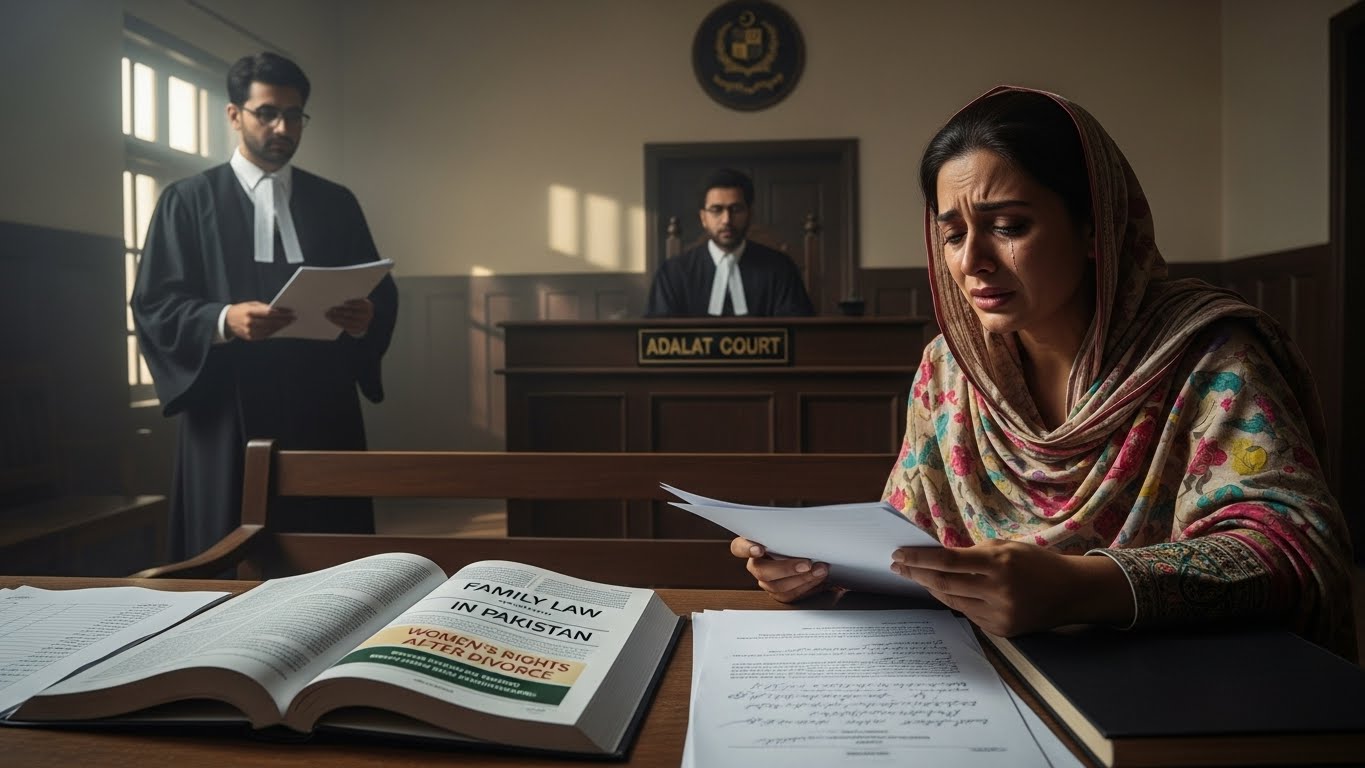

Divorce is never an easy path—emotionally, socially, or legally. In Pakistan, the subject becomes even more sensitive due to cultural norms, family expectations, and the complexities of legal processes. Yet, despite these challenges, Pakistani law provides several clear and definite rights to women after divorce, ensuring their financial security, dignity, and long-term protection.
As a senior advocate specializing in family law, I have handled countless divorce and post-divorce cases. Through this experience, one thing is clear: women in Pakistan often underestimate the legal rights they hold, simply because they are unaware of the protections guaranteed to them by law. This blog aims to offer a detailed, practical, and legally accurate view of those rights to empower women with knowledge and confidence.
Understanding Divorce in the Pakistani Legal Framework
To understand the rights available to women, it is important to first understand how divorce is recognized in Pakistani law. Divorce can occur in several ways:
Talaq (By Husband)
This involves the husband pronouncing talaq and completing the legal formalities, including written notice to the Union Council.
Khula (By Wife)
In a khula, the wife seeks dissolution through the family court on grounds of incompatibility or other valid reasons. In most cases, she returns her dower (haq mehr) as consideration.
Tafweez-e-Talaq (Delegated Right of Divorce)
If the nikahnama grants the wife the delegated right of divorce, she may exercise this right without needing the husband’s consent.
Judicial Divorce (Faskh)
Granted by the court based on specific conditions like cruelty, non-maintenance, desertion, or other grievances.
Regardless of which avenue is pursued, women retain a set of legally enforceable rights after the marriage is dissolved.
Right to Haq Mehr (Dower)
One of the most important rights for a woman is her entitlement to haq mehr, which is guaranteed under Islamic law and legally enforceable in Pakistan.
- If the dower was unpaid at the time of divorce, the woman can claim it through the court.
- If it was deferred, it becomes immediately payable after divorce.
- The husband cannot refuse payment under any circumstances unless the woman voluntarily relinquishes it.
Courts in Pakistan consistently protect a woman’s right to claim her dower. In many cases I’ve handled, women have recovered substantial amounts, even years after separation.
Right to Maintenance During Iddat
After the divorce takes effect, the woman is entitled to maintenance during the iddat period—a waiting time of approximately three menstrual cycles or 90 days.
This maintenance includes:
- Food
- Clothing
- Medical expenses
- Reasonable living arrangements
Even in contentious divorces, this right cannot be denied by the husband.
Custody of Children (Hizanat)
In Pakistan, the welfare of the child is the highest priority. Mothers generally receive custody of young children, particularly:
- Sons up to the age of 7
- Daughters until puberty
However, courts increasingly decide based on the child’s welfare, not strict age rules. This means that in many cases, mothers retain custody even beyond traditional age limits if the court feels it is in the child’s best interest.
The father, however, remains responsible for the financial maintenance of the children even if the mother has custody.
Right to Child Maintenance
This is a crucial point that many divorced women are unaware of.
Under Pakistani law:
- The father must provide monthly financial support for the children.
- This includes food, clothing, housing, education, and medical expenses.
- The amount can increase over time based on inflation and the father’s financial capacity.
- Failure to pay can lead to legal penalties and arrest.
Custody and maintenance are separate issues. Even if a father is denied custody, he must still provide financial support.
Right to Dowry and Personal Belongings
Everything a woman receives during marriage—jewelry, clothing, household items—is legally her property. She has full rights to take all her belongings when leaving the matrimonial home.
If the husband or his family refuses to return her items, she may file a dowry recovery suit, and the court can enforce the return or equivalent monetary compensation.
Right to Shelter and Maintenance (Special Cases)
Although Pakistan does not legally require husbands to support ex-wives beyond iddat, the courts have adopted a progressive approach in certain cases—especially where women are elderly, disabled, or unable to support themselves.
In such cases, the court may order:
- Lump-sum settlements
- Long-term financial support
- Compensation for marital cruelty or abandonment
While not guaranteed in all cases, the judiciary has shown a willingness to protect vulnerable women.
Right to Fair Legal Representation
Every woman has the right to appoint a legal representative to defend her interests in matters related to:
- Divorce
- Child custody
- Maintenance claims
- Dower recovery
- Property disputes
- Domestic violence cases
Professional representation is essential because family laws in Pakistan can be nuanced and complex. Many clients seek assistance from an experienced divorce lawyer to ensure their rights are fully protected throughout the legal process.
Social Stigma vs. Legal Reality
Culturally, divorced women in Pakistan often face judgment or pressure. However, legally, they are protected and empowered. The courts do not discriminate against women in divorce-related matters. In fact, the law strongly protects:
- Their dignity
- Their financial rights
- Their rights as mothers
- Their right to remarry
- Their right to custody
Understanding these rights helps women make informed decisions and prevents exploitation.
Financial Rights Beyond Divorce
Women may also claim financial compensation under certain circumstances, such as:
- Domestic violence
- Emotional abuse
- Abandonment
- Failure to provide maintenance during marriage
Courts can grant damages, and recent case law in Pakistan shows a promising trend toward recognizing emotional and psychological harm.
Islamic Perspective on Women’s Rights After Divorce
Islamic law strongly emphasizes fairness and dignity in divorce proceedings. The Quran clearly instructs men to treat women honorably and ensure their well-being during and after separation.
In many cases, Islamic principles provide even greater protection to women than statutory laws. For example:
- Clear entitlement to mehr
- Mandatory iddat maintenance
- Right to child custody
- Protection from financial exploitation
These principles provide a foundation for Pakistan’s legal framework.
Role of a Senior Family Lawyer
A senior family lawyer’s involvement in divorce cases ensures that the woman’s rights are not overlooked. As an experienced advocate, I have seen how critical proper guidance is in:
- Documenting claims
- Filing legal petitions correctly
- Negotiating settlements
- Presenting evidence in court
- Protecting child custody rights
- Ensuring enforcement of maintenance orders
For many clients, having a knowledgeable divorce lawyer Lahore based in a reputable firm helps them navigate the legal system with confidence and dignity.
Preventing Abuse of Legal Rights
While the law provides many safeguards, unscrupulous parties sometimes attempt to misuse the system. For example:
- Refusing to issue talaq
- Not sending talaq notice to Union Council
- Hiding income to avoid child maintenance
- Keeping woman’s dowry items
- Delaying custody cases
The courts view such tactics unfavorably. With the help of a professional divorce lawyer, women can challenge these behaviors and ensure the court acts in their favor.
Our Legal Services – Mian Law Associates
At Mian Law Associates, we specialize in all areas of family and divorce law. We provide comprehensive legal assistance to protect women’s rights at every stage of the process.
Visit us here:https://mianlawassociates.pk/
Our services include:
- Divorce & Khula Representation
- Child Custody & Guardianship Cases
- Child Maintenance Recovery
- Dower (Mehr) Claims
- Dowry Article Recovery
- Court Marriages & Nikah Services
- Domestic Violence Cases
- Women Protection Legal Consultancy
Our team of senior advocates ensures that every client receives personalized, strategic, and compassionate legal support.
If you are looking for a reliable divorce lawyer or a specialized divorce lawyer Lahore, our firm is committed to guiding you every step of the way.
Conclusion:
Divorce is difficult, but knowing your rights transforms fear into empowerment. Pakistani law, rooted in Islamic principles and judicial fairness, provides women with strong protections after divorce.
Women are entitled to:
- Mehr
- Iddat maintenance
- Child custody
- Child maintenance
- Dowry recovery
- Legal representation
- Dignity and fair treatment
No woman should ever feel helpless or uninformed during a divorce. Legal protections exist—and with proper guidance, they can be fully enforced.
Conclusion
Divorce can be emotionally difficult, but it does not strip a woman of her dignity or legal protection. Pakistani law—supported by Islamic principles—offers strong safeguards for women after divorce. From mehr and iddat maintenance to custody, child support, and dowry recovery, women have clear and enforceable rights. The key to securing these rights is awareness and proper legal guidance.
No woman should feel vulnerable or uninformed during or after a divorce. With the right support and legal representation, she can move forward with confidence, stability, and a secure future.
If you need professional assistance in any family or divorce matter, Mian Law Associates is here to guide you every step of the way:
https://mianlawassociates.pk/
FAQs
Q1. What financial support is a woman entitled to after divorce in Pakistan?
After divorce, a woman is entitled to mehr (dower) if it remains unpaid, as well as maintenance during the iddat period. She may also claim recovery of dowry items and child maintenance if she has custody of the children.
Q2. Can a woman claim child maintenance even if she does not have custody?
Yes. Child maintenance is the father’s responsibility under Pakistani law. Even if the mother does not have custody, she can file a case to ensure the father fulfills his financial obligations.
Q3. How long does the iddat period last, and what are the woman’s rights during it?
The iddat period generally lasts about 90 days or three menstrual cycles. During this time, the husband is legally required to provide full maintenance, including food, shelter, and medical support.
Q4. Can a woman keep her dowry items after divorce?
Yes. All dowry items given to a woman—whether by her family or the husband—are legally her property. She may claim them through the court if they are withheld.
Q5. Is a woman allowed to remarry after divorce?
Yes, once the iddat period ends, a woman is fully entitled to remarry. Pakistani law does not place any restrictions on her right to enter a new marriage after divorce.
Q6. Do mothers always get custody of their children after divorce?
Mothers typically receive custody of young children, especially daughters until puberty and sons until around age seven. However, final decisions are based on the child’s welfare, which remains the court’s top priority.
Q7. What should a woman do first after receiving or seeking divorce?
She should gather important documents—nikahnama, CNIC, dowry list, financial records—and seek legal advice immediately to ensure her rights (such as maintenance, custody, or mehr recovery) are protected.
Q8. What legal options does a woman have if the husband refuses to pay child support?
She can file a child maintenance suit in the family court. The court may order wage attachment, property investigation, or even arrest if the father refuses to comply.
Q9. Can a woman claim compensation for emotional or physical abuse during marriage?
Yes. If there is evidence of abuse, she may seek compensation or file a separate case under domestic violence or family laws for protection and damages.
Q10. How can a woman ensure she receives her full legal rights?
Proper legal representation is essential. An experienced family lawyer can help file claims, protect custody rights, and challenge any unlawful actions by the husband or his family.