
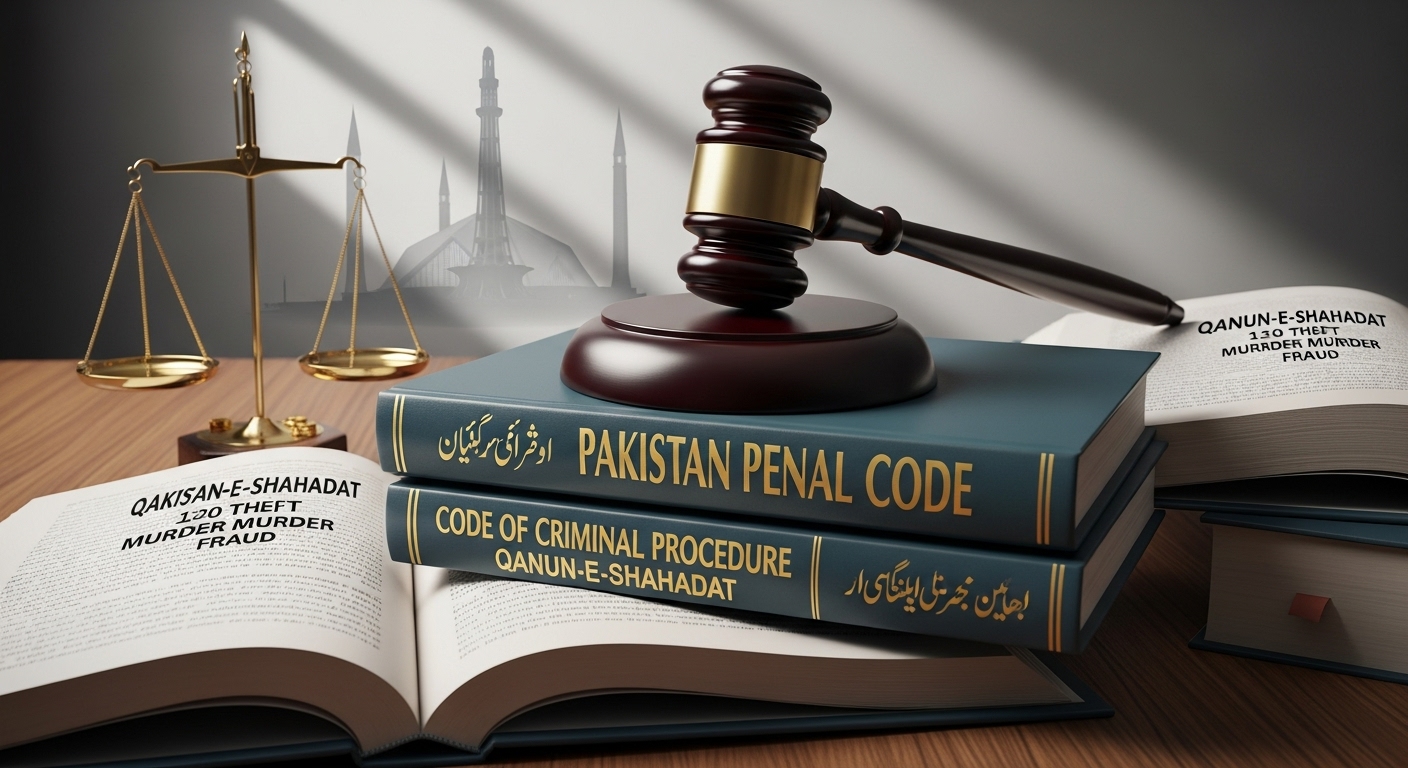

Criminal law in Pakistan is the foundation of the country’s justice system. It determines which acts are crimes, how offenders are prosecuted, and what punishments apply. The purpose of this law is not only punishment but also deterrence, protection of society, and maintenance of peace.
Every citizen—whether a student, business owner, or professional—should understand criminal law in Pakistan because it directly affects public safety and individual rights. The law applies equally to all citizens and ensures accountability through courts and legal institutions.
Introduction
The criminal justice system in Pakistan operates through:
- Police and investigation agencies
- Public prosecutors
- Trial and appellate courts
- Correctional institutions
Together, these institutions enforce criminal law in Pakistan and protect constitutional rights.
What Is Criminal Law
Meaning and Definition
What is criminal law?
Criminal law is a body of rules that defines offenses against the state and prescribes punishment such as imprisonment, fines, or capital penalty.
Unlike civil disputes, crimes are considered offenses against society as a whole.
Objectives of Criminal Law
The main objectives include:
- Protection of life and property
- Maintenance of law and order
- Prevention of crime
- Rehabilitation of offenders
- Delivery of justice
Sources of Criminal Law in Pakistan
1. Pakistan Penal Code (PPC) 1860
The PPC is the primary statute defining crimes.
Major categories include:
- Crimes against human body
- Property offenses
- Abetment and conspiracy
- Public nuisance and state crimes
2. Criminal Procedure Code (CrPC) 1898
The CrPC regulates:
- FIR registration
- Arrest and bail
- Investigation procedures
- Trial stages
3. Constitution of Pakistan
Constitutional guarantees include:
- Article 4 – due process
- Article 9 – security of life
- Article 10-A – right to fair trial
Law and Order Criminal Intent
Law and order criminal intent is one of the most essential elements of crime.
Criminal responsibility requires:
- Actus reus (guilty act)
- Mens rea (guilty mind)
Without intent, most crimes cannot be proven.
Types of Criminal Intent
| Type | Explanation |
|---|---|
| Intention | Deliberate planning |
| Knowledge | Awareness of outcome |
| Recklessness | Ignoring consequences |
| Negligence | Lack of due care |
Vicarious Liability in Criminal Law
Vicarious liability in criminal law means holding one person responsible for the criminal acts of another.
Examples
- Employers liable for employees
- Company directors liable for corporate offenses
- Partners liable for business crimes
This principle is widely applied in:
- Banking fraud
- Environmental crimes
- Corporate misconduct
Civil vs Criminal Law
Understanding civil vs criminal law helps clarify legal procedures.
| Feature | Civil Law | Criminal Law |
|---|---|---|
| Nature | Private dispute | Crime against state |
| Parties | Individual vs individual | State vs accused |
| Purpose | Compensation | Punishment |
| Proof | Balance of probabilities | Beyond reasonable doubt |
Difference Between Civil and Criminal Law
The difference between civil and criminal law lies in intent and outcome.
- Civil law protects personal rights
- Criminal law protects society
A single act may trigger both laws.
Example: fraud can result in imprisonment and compensation.
Civil Law vs Criminal Law Explained
| Aspect | Civil Law | Criminal Law |
|---|---|---|
| Initiation | Private party | Government |
| Result | Damages | Conviction |
| Punishment | Monetary | Jail or fine |
This comparison of civil law vs criminal law is vital for legal understanding.
Criminal Trial Process in Pakistan
The trial process includes:
- FIR registration
- Police investigation
- Challan submission
- Framing of charge
- Evidence recording
- Final arguments
- Judgment
Fair trial standards are mandatory at every stage.
Punishments Under Criminal Law
Punishments under criminal law in Pakistan include:
- Imprisonment
- Fine
- Qisas and Diyat
- Forfeiture of property
- Death penalty (limited offenses)
Role of Courts and Lawyers
Courts
- Magistrate Courts
- Sessions Courts
- High Courts
- Supreme Court
Lawyers
- Protect constitutional rights
- Defend accused persons
- Ensure due process
Criminal Defense Law Firm Dallas – Comparative Insight
A criminal defense law firm Dallas operates under the U.S. legal system. Comparing both systems shows key differences:
| Pakistan | United States |
|---|---|
| PPC-based | Federal & state statutes |
| Judge trials | Jury trials |
| Limited plea bargaining | Extensive plea deals |
This global comparison highlights evolving legal practices.
Challenges in Pakistan’s Criminal Justice System
Major challenges include:
- Delay in case disposal
- Weak investigations
- Lack of forensic resources
- Witness protection issues
- Prison overcrowding
Legal Reforms and Future Outlook
Positive reforms include:
- Police reforms
- Anti-rape laws
- Cybercrime legislation
- Digital FIR systems
- Judicial automation
These steps aim to strengthen criminal law in Pakistan and improve public trust.
Conclusion
Criminal law in Pakistan plays a crucial role in safeguarding society, enforcing accountability, and ensuring justice. From understanding what is criminal law to recognizing civil vs criminal law, legal awareness empowers citizens and strengthens democracy.
With consistent reforms, transparency, and public cooperation, the criminal justice system can continue progressing toward fairness and efficiency.
FAQs
1. What is criminal law in Pakistan?
Criminal law in Pakistan defines crimes and punishments under PPC, CrPC, and constitutional law.
2. What is criminal intent?
Criminal intent is the mental element required to establish guilt.
3. What is vicarious liability in criminal law?
It means holding one person liable for another’s criminal actions.
4. What is the difference between civil and criminal law?
Civil law provides compensation, while criminal law imposes punishment.
5. Can one act be both civil and criminal?
Yes. Fraud, negligence, and defamation may involve both.
6. Which law governs crimes in Pakistan?
The Pakistan Penal Code 1860 governs criminal offenses.