
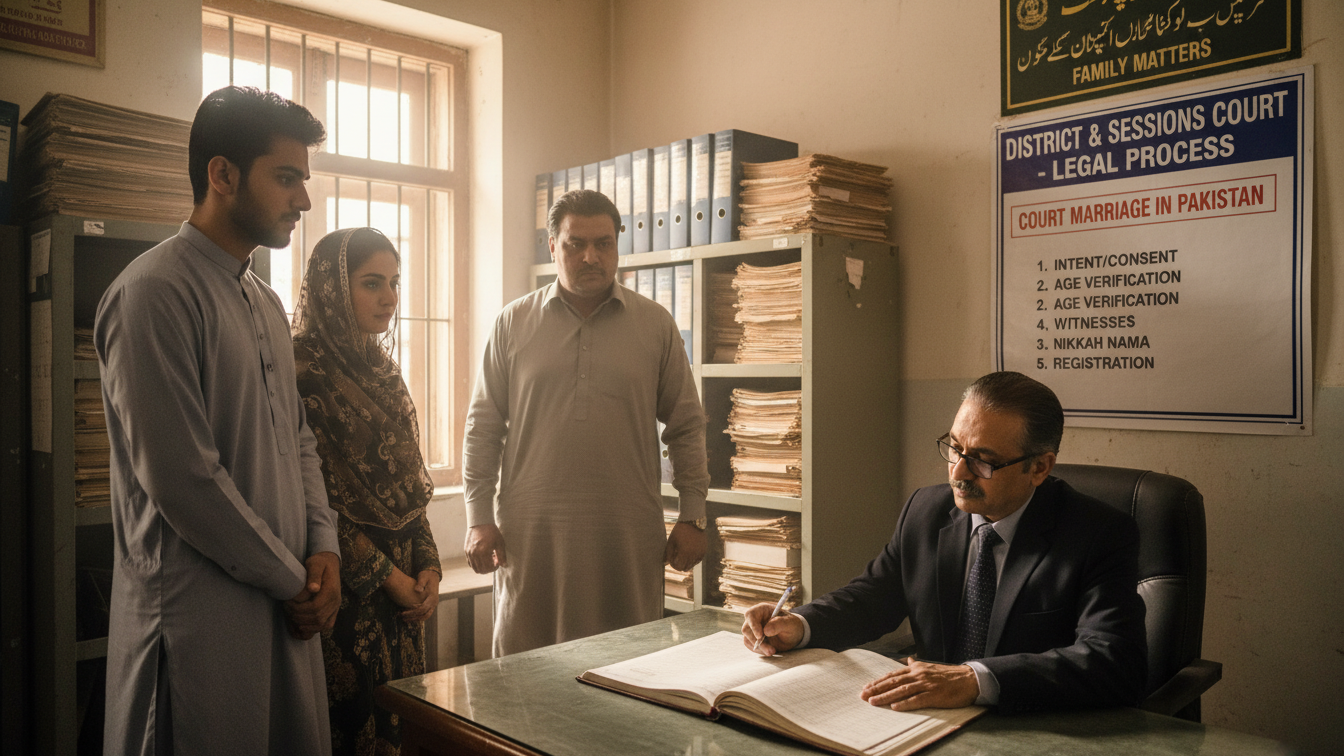

Marriage is a fundamental institution in society, providing legal, social, and emotional stability. In recent years, court marriage has become increasingly popular, especially among couples seeking a lawful and straightforward way to solemnize their union. The concept of court marriage in Pakistan allows two consenting adults to marry legally without unnecessary social or cultural hurdles.
This article serves as a complete guide to understanding court marriage, its legal framework, requirements, benefits, and most importantly, the court marriage fee in Pakistan.
What Is Court Marriage?
Legal Definition of Court Marriage
Court marriage refers to a legally recognized marriage conducted and registered under Pakistani law. Unlike traditional weddings, court marriage does not require elaborate ceremonies. Instead, it focuses on legal consent, documentation, and registration.
In court marriage in Pakistan, the marriage is solemnized through a Nikah conducted in the presence of witnesses and a Nikah Registrar, followed by official registration.
Islamic Perspective on Court Marriage
From an Islamic point of view, a marriage is valid if:
- Both parties consent freely
- There are two adult Muslim witnesses
- Mehr is agreed upon
Court marriage fulfills all these requirements, making it fully compliant with Islamic principles.
Court Marriage in Pakistan: Legal Framework
Relevant Marriage Laws in Pakistan
Court marriage in Pakistan is governed by:
- Muslim Family Laws Ordinance 1961
- Nikah Nama Registration Rules
- Family Courts Act
These laws ensure that the rights of both spouses are protected.
Role of Family Courts
Family courts play a key role in verifying consent, handling affidavits, and ensuring that the marriage is conducted lawfully.
Eligibility Criteria for Court Marriage
Age Requirement
According to Pakistani law:
- Male must be at least 18 years old
- Female must be at least 18 years old
Meeting the legal age requirement is mandatory for court marriage.
Consent and Free Will
Free consent is the backbone of court marriage. Both individuals must willingly agree to the marriage without pressure or coercion.
Required Documents for Court Marriage
To complete a court marriage in Pakistan, the following documents are usually required:
- Original CNIC of bride and groom
- Copies of CNICs
- Two passport-size photographs of each
- CNIC copies of two adult witnesses
- Affidavit of free will
- Divorce decree (if previously married)
Having complete documentation ensures a smooth process.
Step-by-Step Procedure of Court Marriage in Pakistan
Nikah Registration Process
The process begins with Nikah solemnization conducted by a licensed Nikah Registrar. Mehr, witnesses, and consent are recorded in the Nikah Nama.
Affidavits and Statements
Both parties submit affidavits confirming their marital status and free consent. These affidavits are verified by a legal authority.
Once completed, the marriage becomes legally valid and registered.
Court Marriage Fee in Pakistan
Government Fees
The official court marriage fee in Pakistan charged by the government is relatively low and usually includes:
- Nikah registration fee
- Stamp paper charges
These fees may vary slightly by province.
Lawyer and Documentation Costs
If legal assistance is required, additional costs may include:
- Lawyer consultation fee
- Documentation preparation
- Affidavit attestation
Overall, the court marriage fee in Pakistan is affordable compared to traditional weddings.
Time Duration for Court Marriage
One of the biggest advantages of court marriage is speed. In most cases, the entire process can be completed within one day, provided all documents are available.
Advantages of Court Marriage
Court marriage offers several benefits:
- Legal protection for both spouses
- Simple and quick process
- Affordable court marriage fee in Pakistan
- Privacy and confidentiality
- Full compliance with Islamic and legal requirements
Common Misconceptions About Court Marriage
Many people believe court marriage is illegal or un-Islamic. This is not true. Court marriage in Pakistan is fully legal and recognized by law and religion.
Another misconception is that court marriage eliminates family rights, which is also false. Legal marriage protects the rights of both partners.
Conclusion
Court marriage is a practical, legal, and Shariah-compliant solution for couples who wish to marry with dignity and simplicity. With a clear legal framework, affordable court marriage fee in Pakistan, and quick processing, court marriage in Pakistan continues to gain popularity.
FAQs
1. What is court marriage?
Court marriage is a legally recognized marriage conducted and registered under Pakistani law.
2. Is court marriage in Pakistan legal?
Yes, court marriage in Pakistan is completely legal and protected by law.
3. What is the court marriage fee in Pakistan?
The court marriage fee in Pakistan varies but is generally affordable, including government and documentation charges.
4. How long does court marriage take?
Court marriage can usually be completed within a single day.
5. Is court marriage valid in Islam?
Yes, court marriage fulfills all Islamic requirements of Nikah.
6. Are witnesses required for court marriage?
Yes, two adult witnesses are mandatory.