
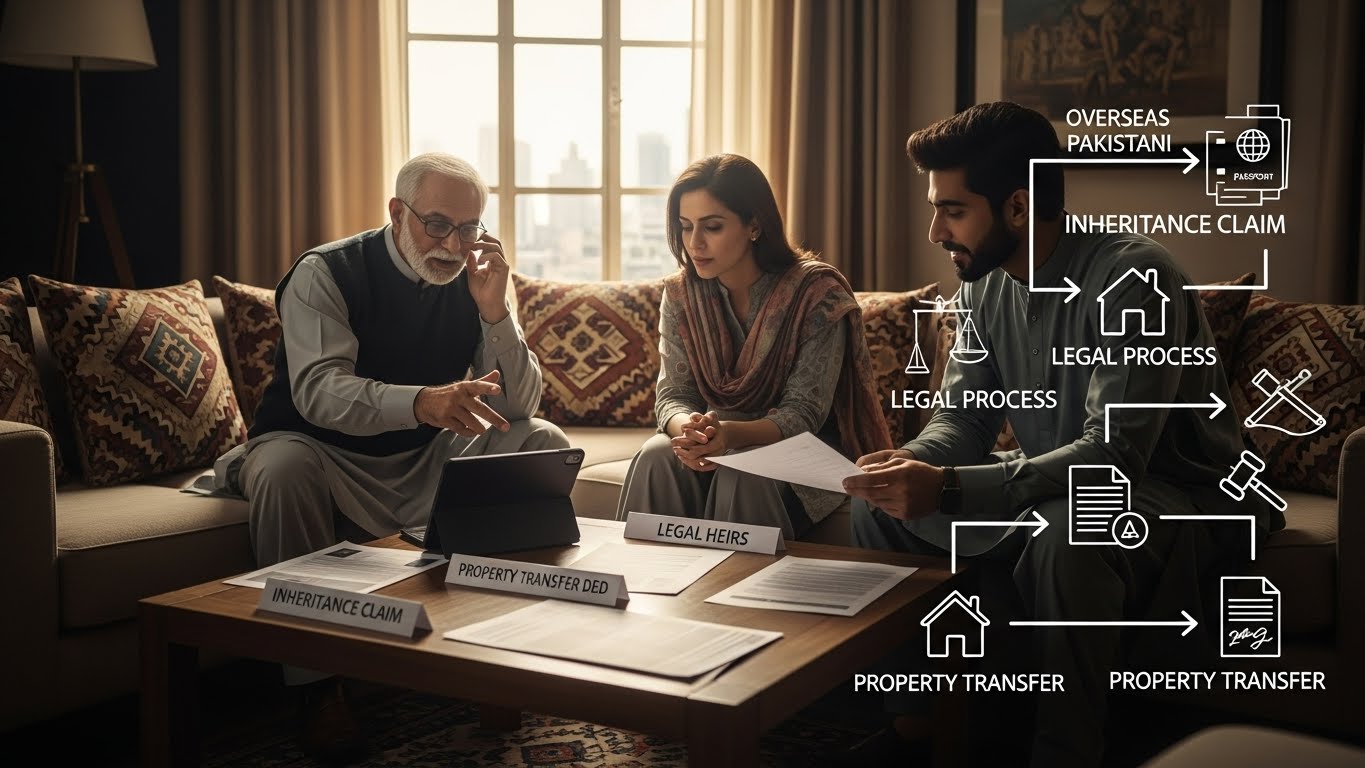

Inherited property in Pakistan is governed by Islamic law, statutory laws, and local land revenue rules. For overseas Pakistanis, these rights remain intact regardless of residency. That said, distance often complicates enforcement. This is where Legal Services for Overseas Pakistanis become essential.
Under Pakistani law, heirs are entitled to their lawful share once the owner passes away. However, without proper documentation, claims can be delayed or even denied. Many overseas families discover issues years later, which increases risk.
Moreover, corporate law in Pakistan intersects with inheritance when properties are held under companies, partnerships, or trusts. Understanding this overlap early saves time and money.
Why Legal Services for Overseas Pakistanis Matter
Legal Services for Overseas individuals are tailored to bridge the gap between foreign residence and Pakistani legal systems. These services typically include documentation, representation, and compliance support.
Because overseas Pakistanis can’t attend every hearing or visit land offices, an associate lawyer acts on their behalf. This professional ensures filings are accurate, deadlines are met, and disputes are handled efficiently.
In addition, legal services help overseas heirs avoid fraud—a sadly common issue. Proper verification, due diligence, and legal notices safeguard ownership.
Overview of Corporate Law in Pakistan for Property Matters
Corporate law in Pakistan plays a key role when inherited property is tied to a business entity. For example, shares in a family company that owns land must be transferred according to corporate statutes, not just inheritance laws.
The Companies Act, SECP regulations, and partnership laws apply. An associate lawyer with corporate expertise ensures compliance. This dual approach—inheritance plus corporate law—prevents future litigation.
Notably, corporate law in Pakistan + Power Word + Number strategies emphasize structured, enforceable solutions that protect overseas investors and heirs alike.
Step-by-Step Process to Claim Inherited Property from Abroad
Claiming inherited property involves multiple stages. Each must be completed carefully.
Identifying Legal Heirs
First, all legal heirs must be identified according to Shariah and Pakistani law. This list is crucial for succession documents.
Succession Certificate and NADRA Verification
A succession certificate issued by a Pakistani court confirms heirs’ rights. NADRA’s verification system now simplifies identity confirmation for overseas Pakistanis.
Power of Attorney for Overseas Pakistanis
A registered Power of Attorney allows an associate lawyer or trusted relative to act on your behalf. This document must be attested by the Pakistani embassy abroad.
These steps, when handled through Legal Services for Overseas, significantly reduce processing time.
Transferring Inherited Property: Legal Methods Explained
Once ownership is established, transfer can proceed.
Mutation (Intiqal) Process
Mutation updates land records to reflect new ownership. Without mutation, legal ownership remains incomplete.
Gift, Sale, or Partition
Heirs may gift shares, sell property, or partition land. Each method has tax and legal implications, requiring advice under corporate law in Pakistan where applicable.
Role of an Associate Lawyer in Property Inheritance Cases
An associate lawyer acts as your legal representative, advisor, and problem-solver. They liaise with courts, revenue offices, and registrars.
For overseas Pakistanis, this role is invaluable. Lawyers ensure transparency, prevent manipulation by local parties, and keep you informed. With Legal Services for Overseas, communication gaps are minimized.
Common Challenges Faced by Overseas Pakistanis
Distance isn’t the only issue. Overseas heirs often face:
- Forged documents
- Uncooperative co-heirs
- Delayed court proceedings
- Lack of updated land records
Strategic use of corporate law in Pakistan remedies, such as injunctions and legal notices, can resolve many of these challenges.
Taxation, Stamp Duty, and Hidden Costs
Property transfers incur stamp duty, capital gains tax, and registration fees. Overseas Pakistanis must also consider foreign exchange regulations.
A skilled associate lawyer calculates liabilities upfront. This proactive approach avoids surprises and ensures compliance with Pakistani tax laws.
Digital Solutions and Online Property Verification
Pakistan has introduced online land record systems in several provinces. Overseas Pakistanis can now verify ownership digitally.
These platforms, combined with Legal Services for Overseas, allow remote monitoring of property status. For more details, visit the official Punjab Land Records Authority website:
Dispute Resolution and Litigation Options
When disputes arise, litigation may be unavoidable. Courts in Pakistan recognize overseas plaintiffs, provided documentation is complete.
Alternative dispute resolution (ADR) is also gaining traction. Mediation saves time and preserves family relationships. Corporate law in Pakistan frameworks increasingly support ADR mechanisms.
Corporate Law in Pakistan + Power Word + Number: 5 Critical Legal Safeguards
Here are five safeguards every overseas Pakistani should know:
- Due Diligence: Verify titles before claiming.
- Documentation: Maintain certified copies abroad.
- Representation: Appoint a competent associate lawyer.
- Compliance: Follow corporate and inheritance laws together.
- Monitoring: Regularly review property records.
These safeguards reinforce trust and legal certainty.
Choosing the Right Legal Partner in Pakistan
Selecting the right lawyer is crucial. Look for experience in Legal Services for Overseas, inheritance law, and corporate law in Pakistan.
Ask about past cases, communication practices, and transparency. A reliable associate lawyer provides periodic updates and clear billing.
Best Practices to Protect Inherited Property
To protect your inheritance:
- Register all documents promptly
- Avoid verbal agreements
- Keep digital backups
- Engage legal services early
These steps ensure long-term security and peace of mind.
Conclusion
For overseas Pakistanis, transferring or claiming inherited property can feel overwhelming. However, with the right Legal Services for Overseas, guidance under corporate law in Pakistan, and support from a trusted associate lawyer, the process becomes manageable and secure.
By understanding your rights, following structured steps, and using modern legal tools, you can protect your inheritance confidently—no matter where you live.
FAQs
Q1. Can overseas Pakistanis claim inherited property without visiting Pakistan?
Yes. With a Power of Attorney and Legal Services for Overseas, physical presence isn’t mandatory.
Q2. How long does it take to obtain a succession certificate?
Typically 3–6 months, depending on court workload and documentation.
Q3. Is corporate law in Pakistan relevant for family property?
Absolutely, especially when property is held through companies or partnerships.
Q4. What documents are required from overseas heirs?
Passport, NICOP, death certificate, and embassy-attested Power of Attorney.
Q5. Can an associate lawyer handle disputes alone?
Yes, provided they have proper authorization and complete records.
Q6. Are online land records reliable?
They’re increasingly accurate but should be verified legally.